
· by Michael Blair, Nashville's Closets
Closets are full of clothing and boxes, and a light fixture in one is close to all of it. The electrical code has rules specific to closet lighting for that reason: which fixture types are allowed, and how much clearance they need from the nearest shelf or hanging rod. Older houses here routinely have fixtures that violate both, and a permitted renovation is usually when someone finds out.
What is not allowed
Incandescent fixtures with exposed bulbs, the bare bulb on a porcelain base with a pull chain, are prohibited in closets outright. So are pendant fixtures and any fixture with an open lamp. The reason is heat: an incandescent bulb runs hot enough to ignite fabric or cardboard pressed against it, and in a closet something eventually gets pressed against it.
That rule dates back decades, which is why so many pre-war and mid-century houses in Nashville have the offending fixture. It was standard when the house was built and nobody has touched the closet since.
What is allowed, and the clearances
Surface-mounted and recessed fixtures with a completely enclosed lamp are permitted, as are LED and fluorescent fixtures, with clearance from the storage space. Surface-mounted incandescent or LED fixtures with an enclosed lamp need a set distance from the nearest shelf or rod, and recessed enclosed fixtures and surface fluorescent fixtures are allowed closer. The storage space is defined as the area above and beside the shelves and rod, so a fixture on the ceiling above a shelf is measured to that shelf.
The clearances are in the electrical code and are enforced by Metro Codes on any permitted work. The practical result is that a closet light goes on the ceiling in the open area in front of the shelving, or above the door, not over the rod.
- No exposed incandescent bulbs, no pendants
- Enclosed surface or recessed fixtures, with clearance from shelves
- LED and fluorescent fixtures may sit closer than enclosed incandescent
- Fixture over the open floor area or the door, not over the rod
What actually lights a closet well
A single ceiling fixture lights the top shelf and puts the person standing in the doorway in their own shadow. In a reach-in, a fixture just inside the door header aimed back into the closet works better. In a walk-in, several small recessed or surface LED fixtures spaced along the ceiling light every section, and a fixture centered in a walk-in is the common mistake.
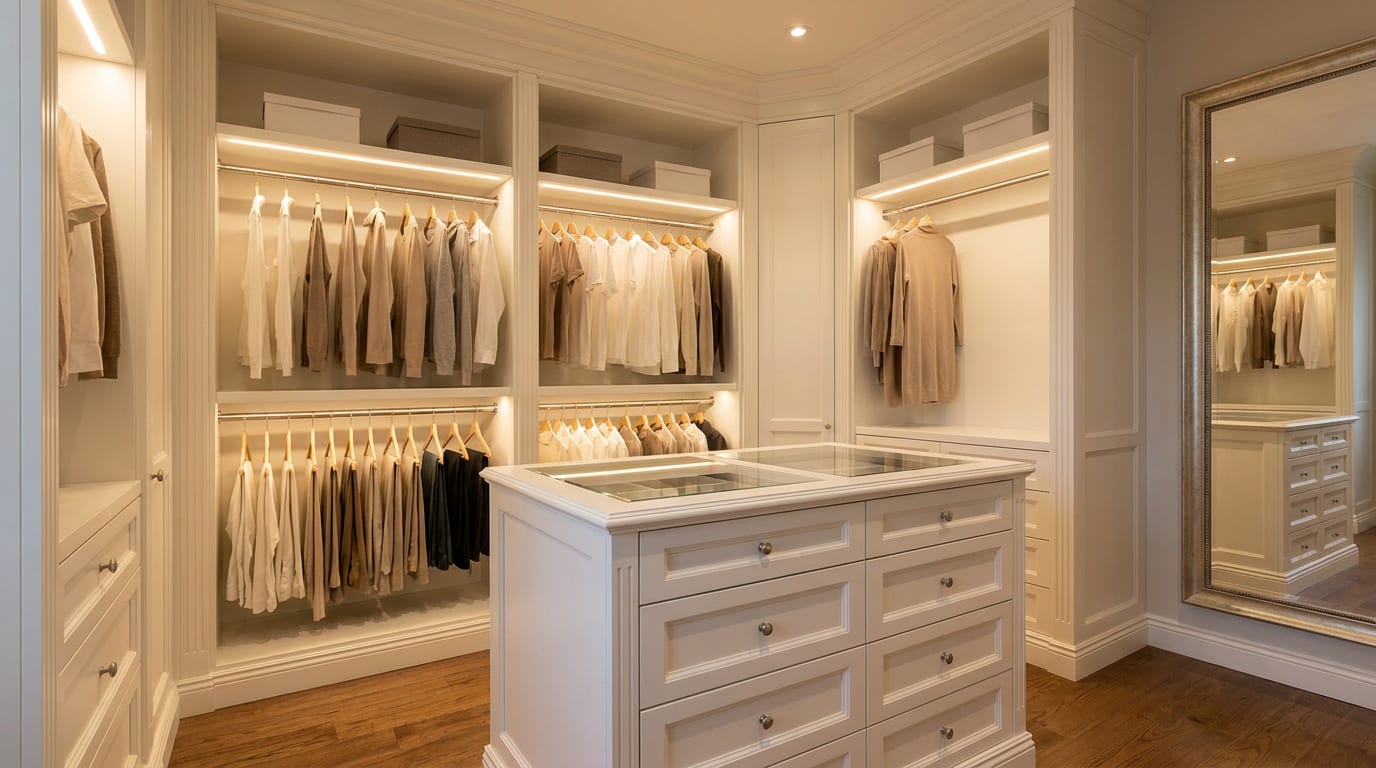
LED strip lighting under the shelves and along the rod, now widely used in fitted closet systems, puts light exactly where the clothes are, runs cool, and is permitted because it is low voltage and enclosed. A door switch or a motion sensor removes the question of a light left on in a closed closet.
Fixing an old closet
Replacing the pull-chain fixture with an enclosed LED fixture on the same box is a short electrical job, and it removes a fire risk that most homeowners do not know is there. If the box is over the rod, the fixture may need to move, which means a new box and a short run of cable.
It is worth doing before any inspection makes it compulsory, and before a stack of sweaters ends up against a hot bulb. For a house being listed, an inspector will note bare-bulb closet fixtures, and a buyer will ask about them.